Eco impact
Every litre burned.
Counted. Offset.
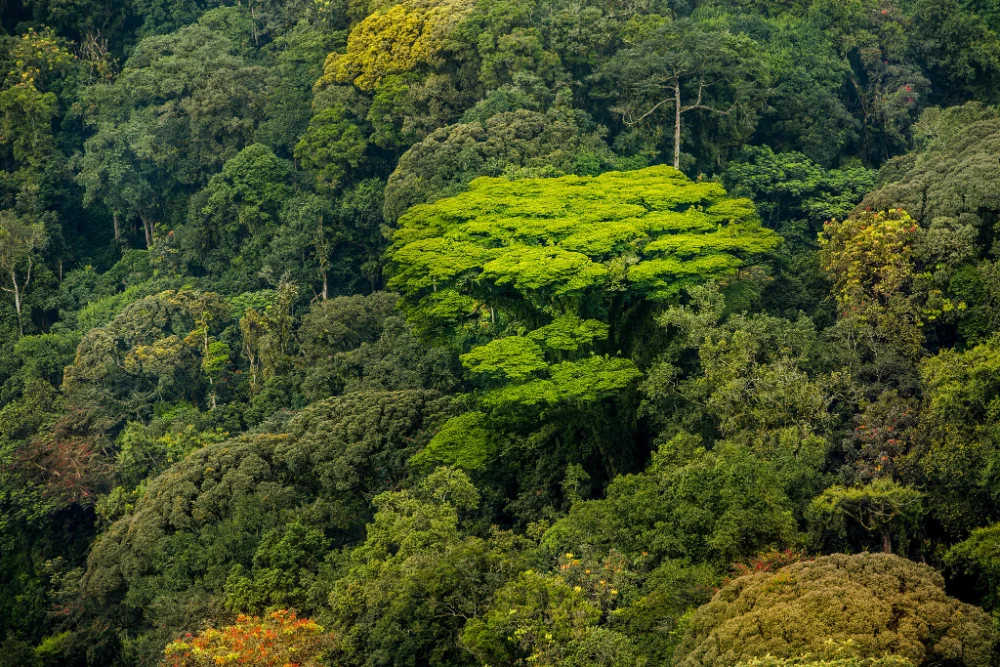
Every ride on shareRide carries a small eco fee, calculated from the actual fuel your trip burns. We pool it and turn it into trees growing in Rwanda.
Every ride on shareRide carries a small eco fee, calculated from the actual fuel your trip burns. We pool it and turn it into trees growing in Rwanda.
No black-box carbon models. We know how far your ride went and how much fuel the car uses, so we know exactly how much CO₂ it made, and exactly what it costs to put that carbon back in the ground.
Burning one litre of petrol releases about 2.3 kg of CO₂; diesel is heavier at about 2.7 kg. Electric rides have no tailpipe at all. Chemistry, not estimation.
A typical car uses about 0.7 L over 10 km. 0.7 × 2.3 ≈ 1.6 kg of CO₂, around 160 g per kilometre.
Offsetting 1.6 kg genuinely costs a few francs. The small eco fee on a 10 km trip covers it comfortably, the rest compounds into more trees.
Fuel burned = distance ÷ efficiency. CO₂ = litres × the fuel's factor (petrol 2.3 kg, diesel 2.7 kg, electric ≈ 0). Offset fee = enough to plant it away, rounded to the nearest 10 francs.
A tree absorbs roughly 220 kg of CO₂ over its lifetime, about 15 to 22 kg a year for 10 to 15 years. Offset rates are set by admins and shown in the app; figures here use the standard petrol factor of 2.3 kg CO₂ per litre.
Click each step to follow one ride's eco fee on its way to the ground.
The app keeps a personal impact page for every rider. Set a typical week below and see what your own commuting would grow in a year.
Estimates use a typical petrol car at 14 km/L. Your in-app page uses your actual rides.
Honestly: nothing is planted yet. But this is how monitoring will work, every real planting site becomes an island like these. Step inside one in 3D and watch trees appear; once we're live, your eco fees plant them and each island turns into a live project page with real locations, photos, and progress.
Every eco fee lands in a dedicated fund. Planting one tree costs about RWF 6,000, so the fund's balance translates directly into trees. When planting starts, every project will be listed here, on the ground and photographed.
See exactly what a ride costs, and what it plants, before you book.